

Not absorbing enough iron from the diet is a common problem, especially among fertile women and those who do not enjoy consuming large amounts of liver and red meat. Do you fall into this category? If so, this herbal recipe might be exactly what you want and need.
Disclaimer
Let’s get this out of the way before we begin.
The information and recipe shared below are not intended to diagnose, treat, cure, or prevent any disease.
Multiple herbs in this herbal iron tonic recipe may reduce blood pressure and stimulate the liver and kidneys to detoxify more efficiently. If you are currently taking medication for your heart, blood pressure, liver, kidneys or urinary system, consult a doctor before taking this iron tonic and consider working with a clinical herbalist.
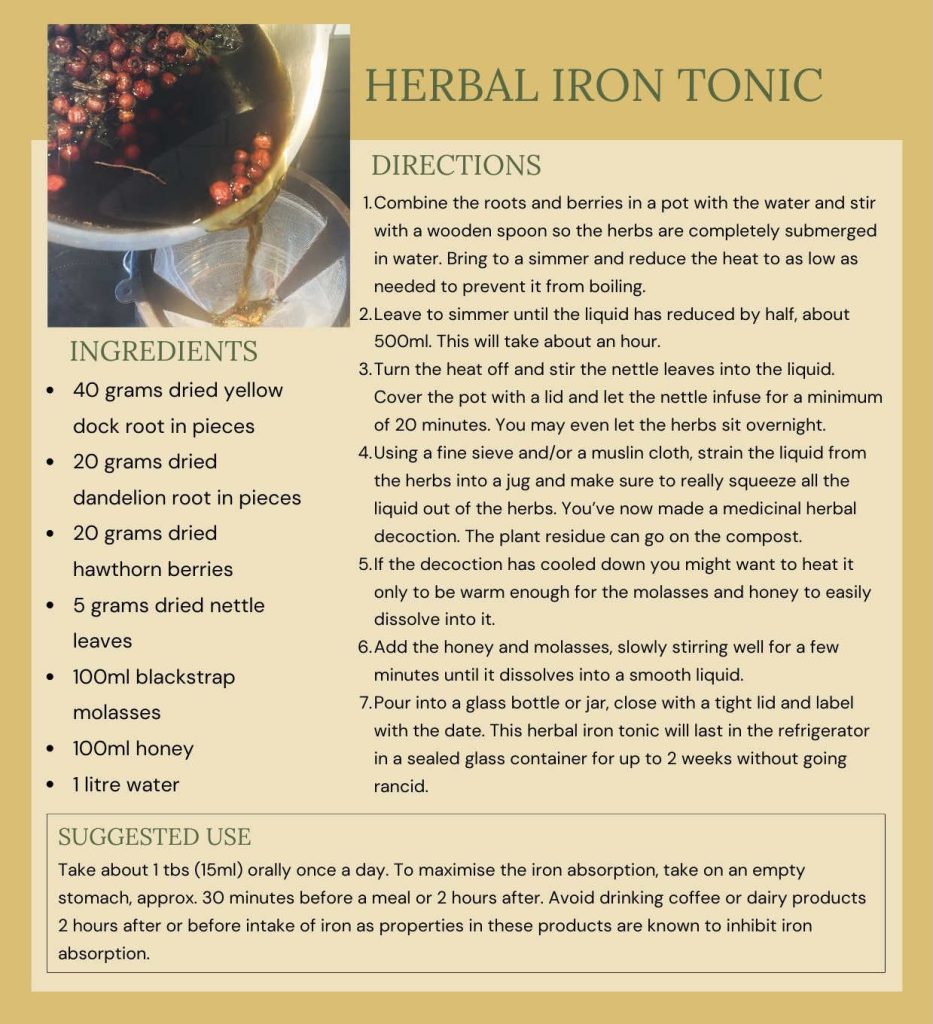
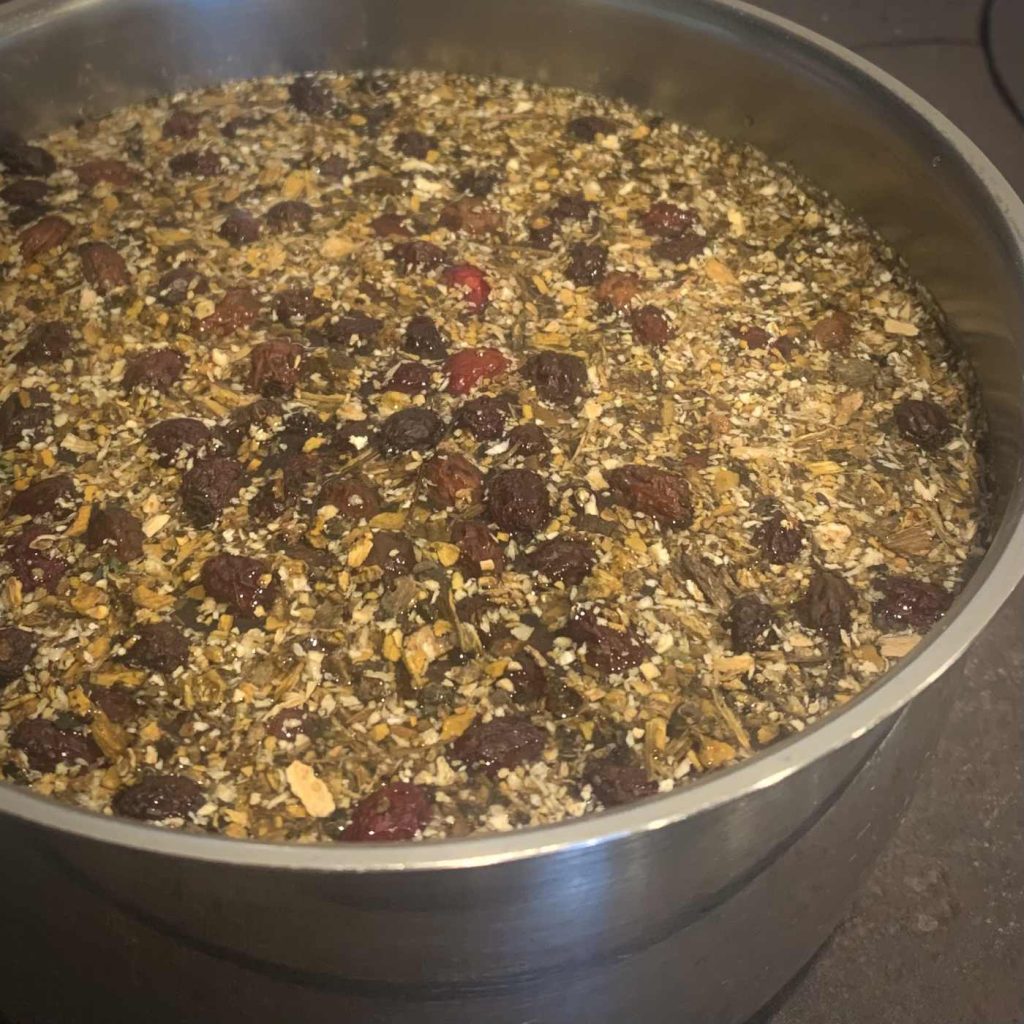
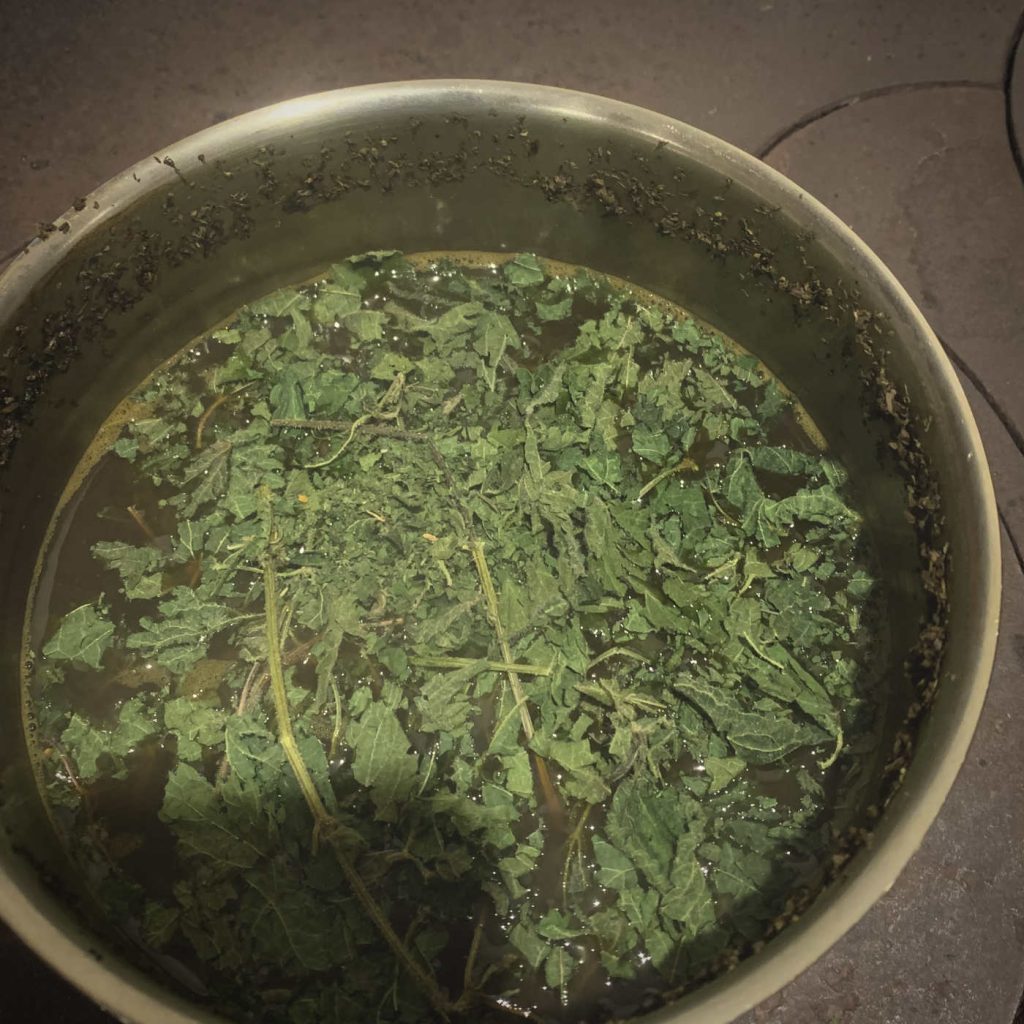
Recipe
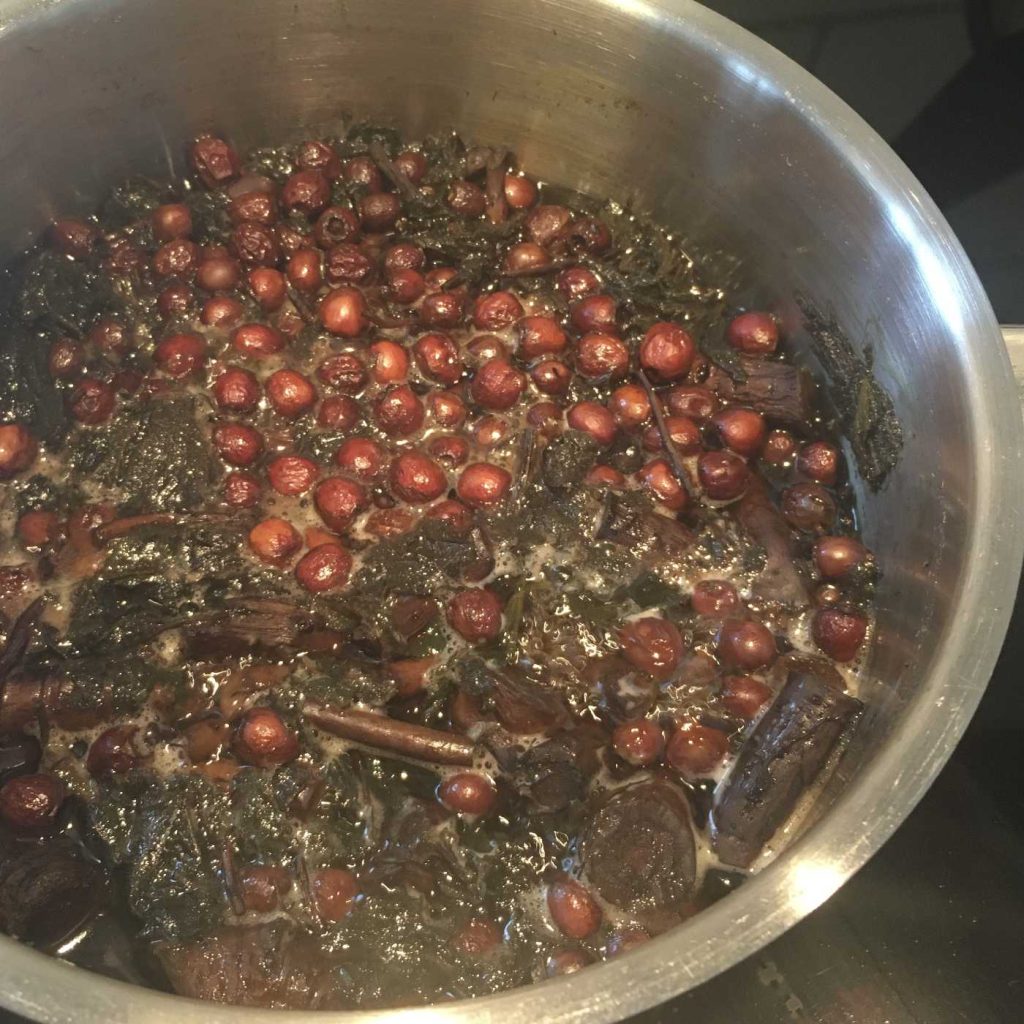
The iron medicine in the plants
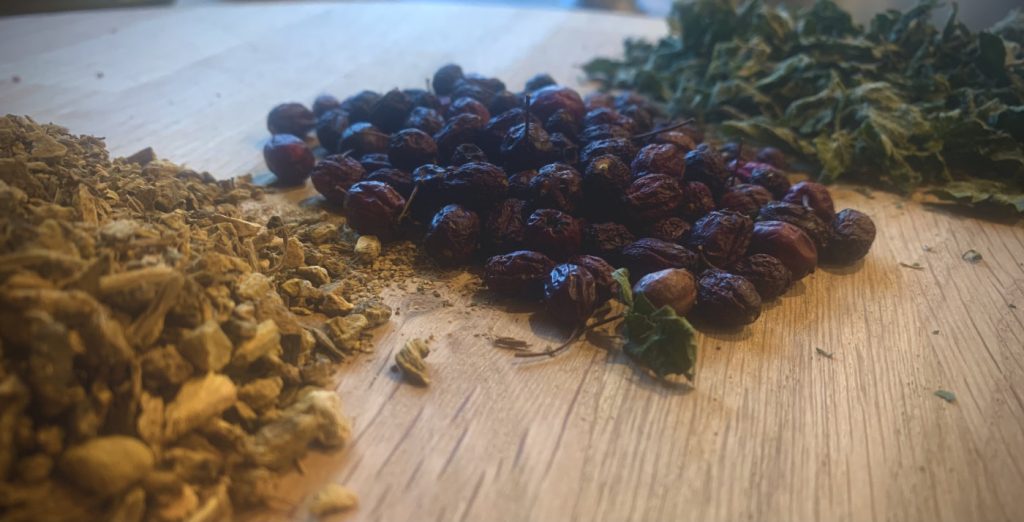
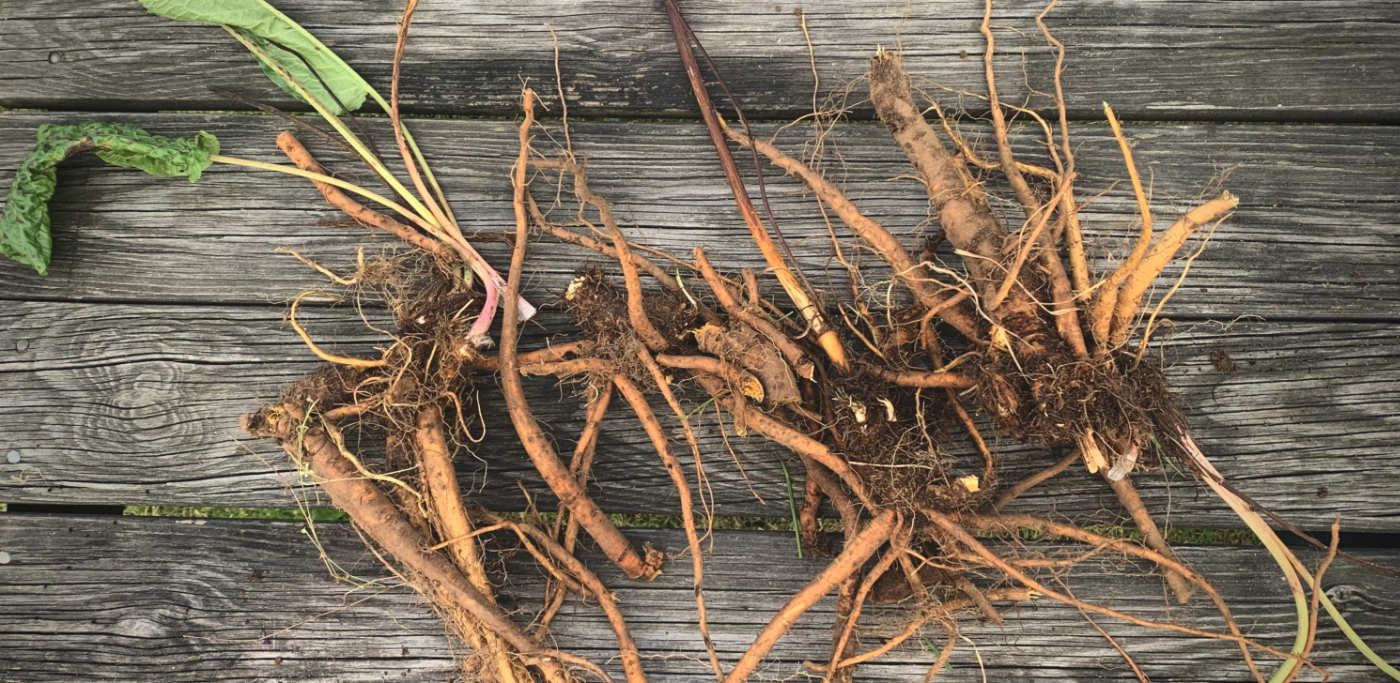
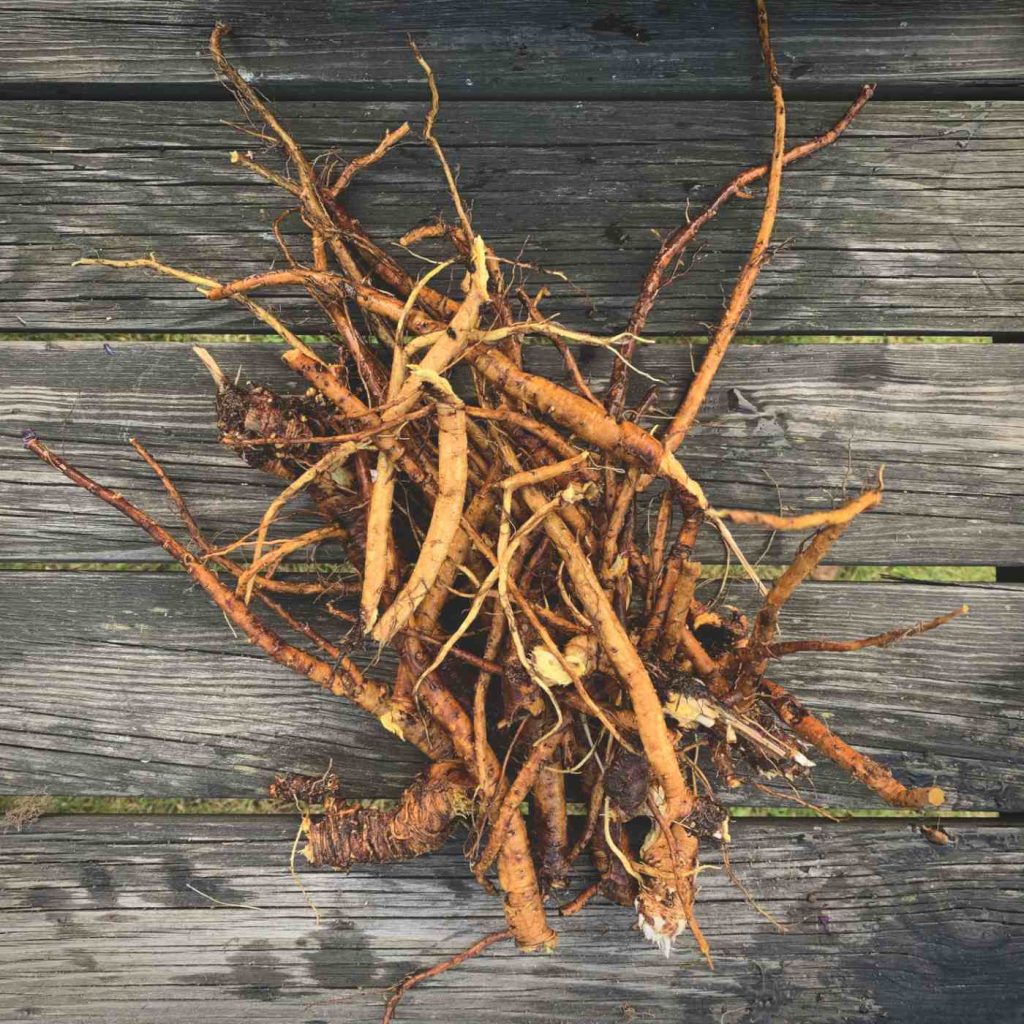
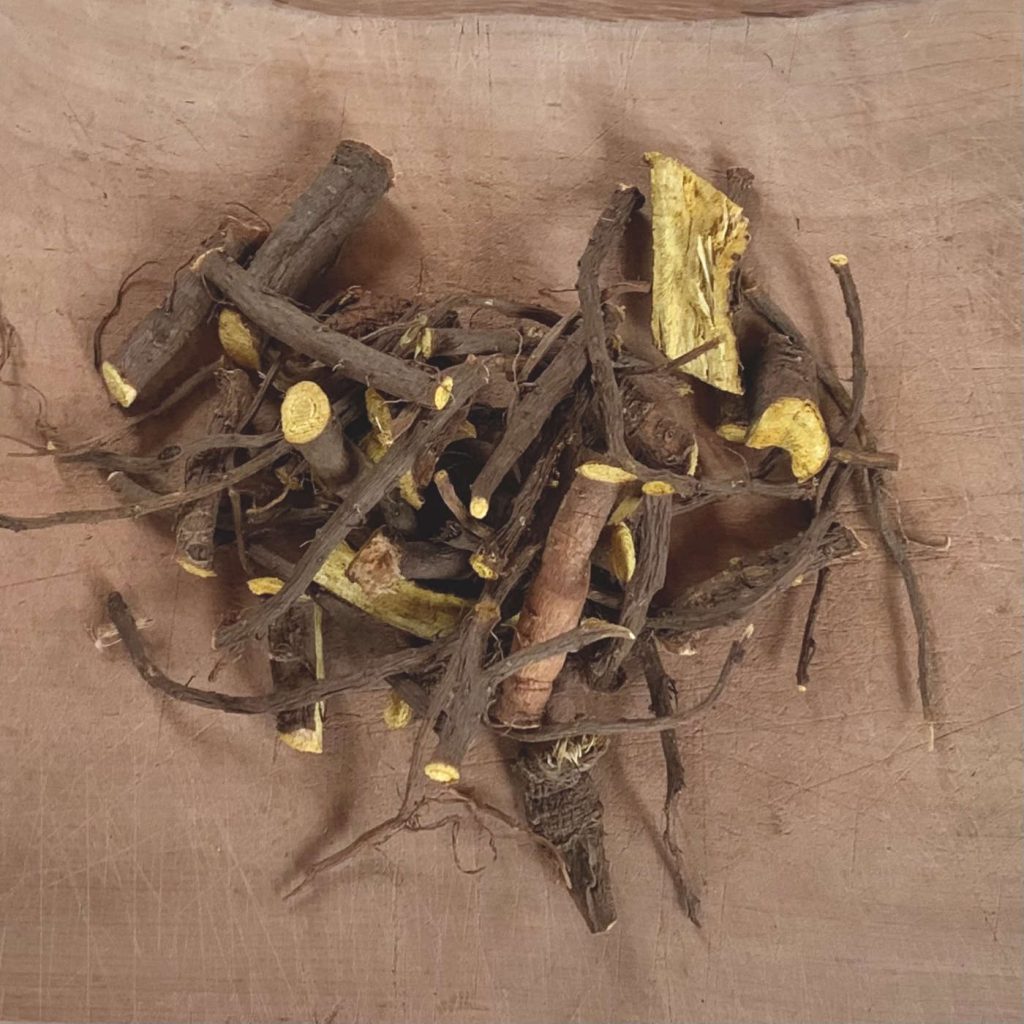
Yellow dock (Rumex crispus)
These yellow bitter roots have a rich iron content and improve the body’s ability to absorb and utilise iron. The yellow dock works naturally by improving digestion and stimulating bile production, which additionally helps increase the absorption of iron from food. With its bioavailable iron and other minerals, it is a gentle and effective remedy for boosting iron levels in the blood, particularly for those experiencing anaemia or fatigue related to iron deficiency.
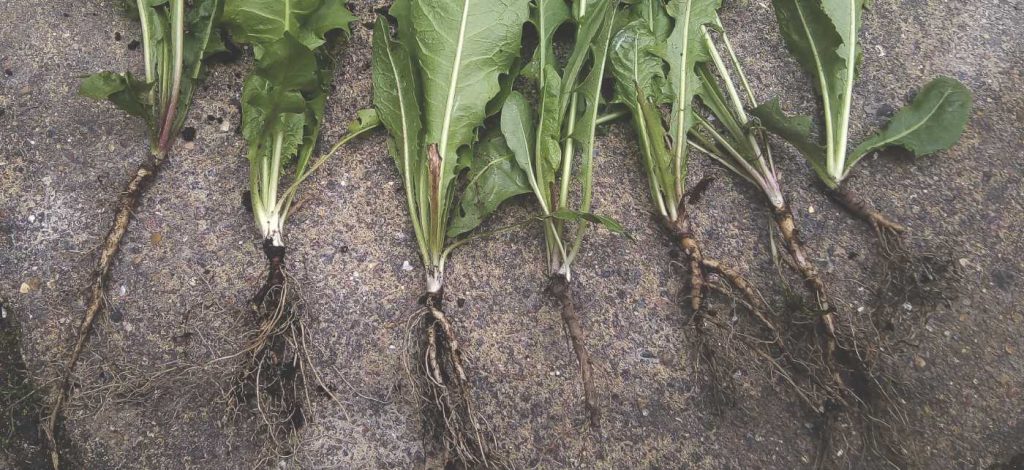
Dandelion (Taraxacum officinale)
These roots have mild detoxifying properties which support liver function, aiding in the efficient processing of nutrients and improving overall blood health, making it a valuable herb for those struggling with iron deficiency. Additionally, dandelion root acts as a natural digestive aid, stimulating bile production and promoting better nutrient absorption, which can enhance the body’s ability to absorb iron from food.
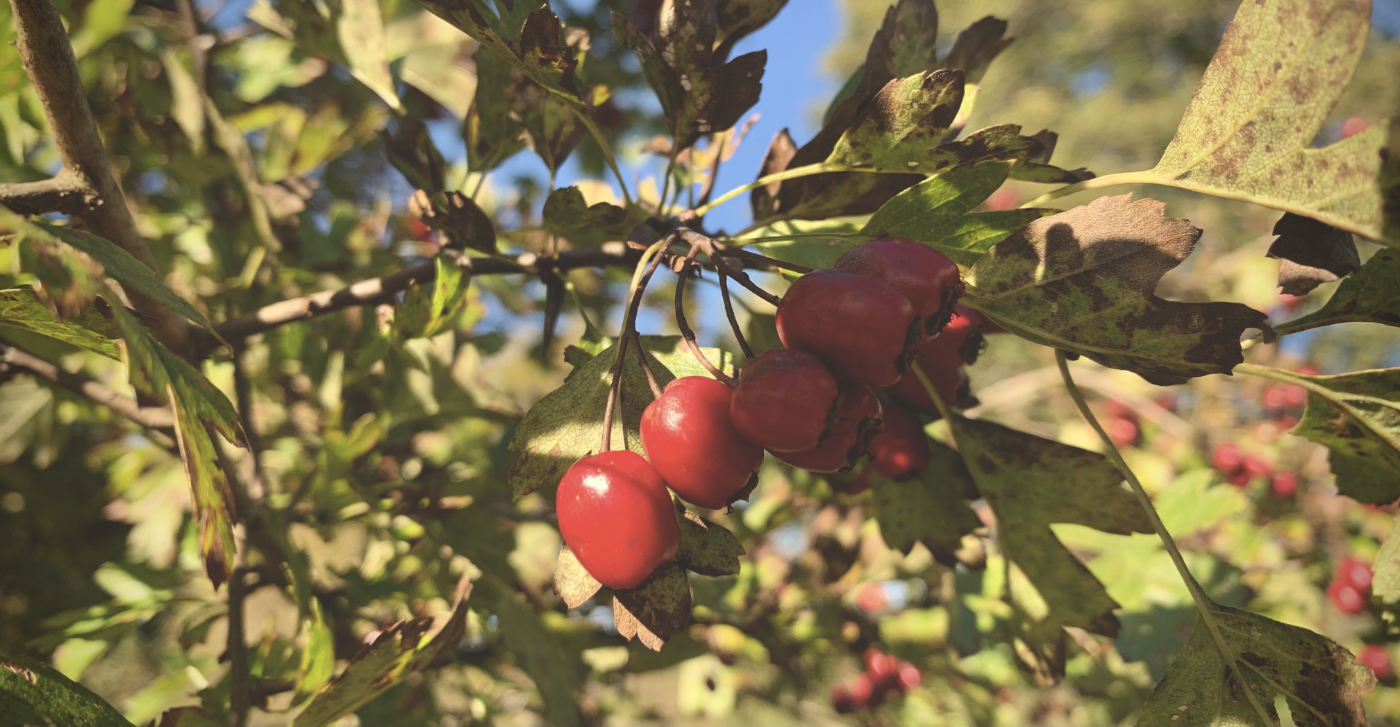
Hawthorn (Crataegus monogyna)
These wonderful berries support cardiovascular health, which can benefit those with low iron levels. Iron deficiency often leads to poor circulation and low oxygen transport in the blood, and hawthorn berries help by improving blood flow, strengthening the heart, and enhancing the efficiency of oxygen distribution throughout the body. While they don’t contain high levels of iron themselves, their rich antioxidant content and ability to improve circulation will support the body’s overall ability to recover from the fatigue and weakness often associated with iron deficiency.
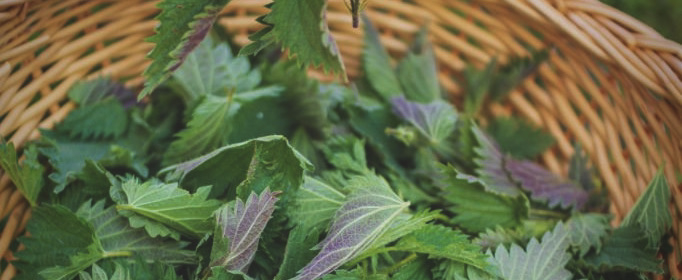
Stinging Nettle (Urtica dioica)
This wonder plant is packed with vitamins and minerals, including iron, calcium, magnesium and vitamin C, making it a natural tonic for building and replenishing the blood and generally supporting the physical body. Nettles’ nutrient-rich properties make a wonderful addition to any kind of herbal blood-building remedy as well as giving energy to the iron-depleted.
Iron support from blackstrap molasses and honey
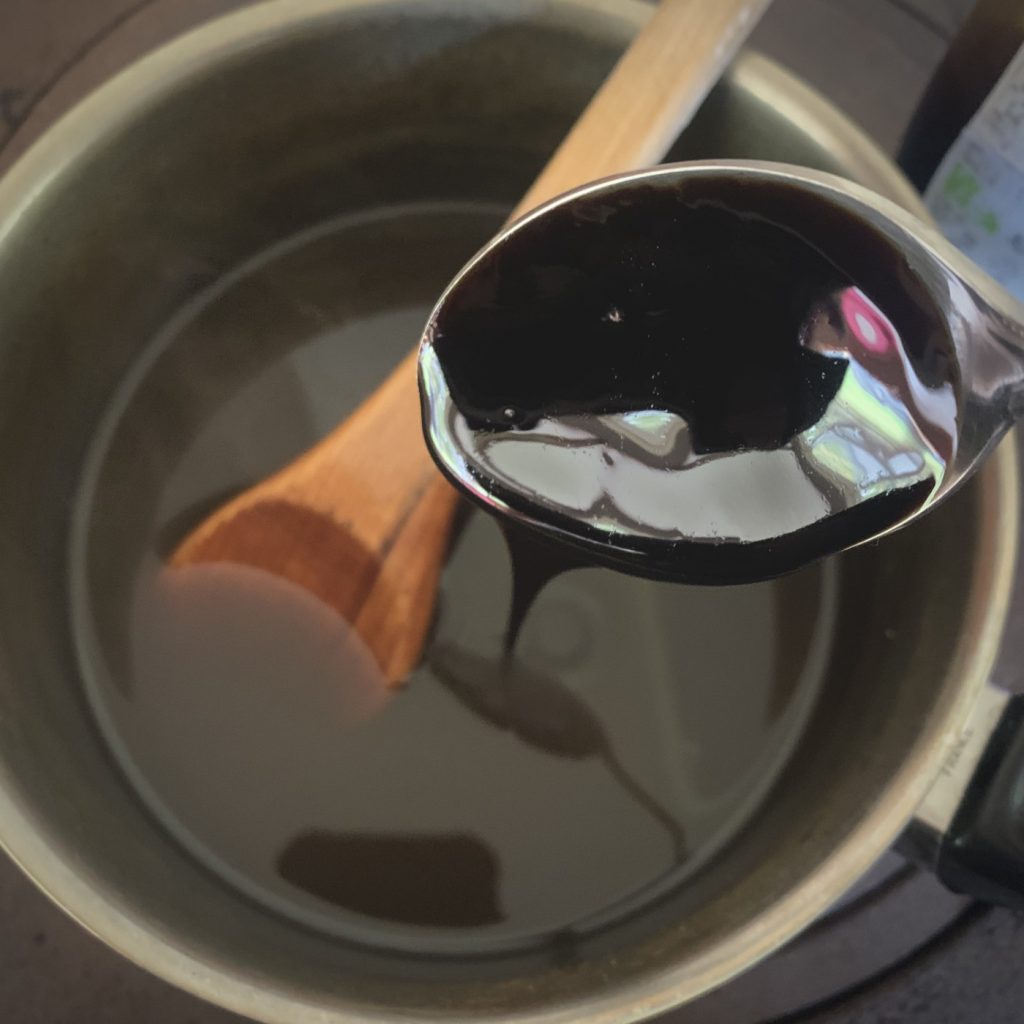
Blackstrap molasses is used in this tonic because it is a rich, natural source of iron, as well as other essential minerals like calcium, magnesium, and potassium. Additionally, blackstrap molasses contains vitamin B6, which supports red blood cell production, further helping to alleviate symptoms like fatigue and weakness associated with iron deficiency.
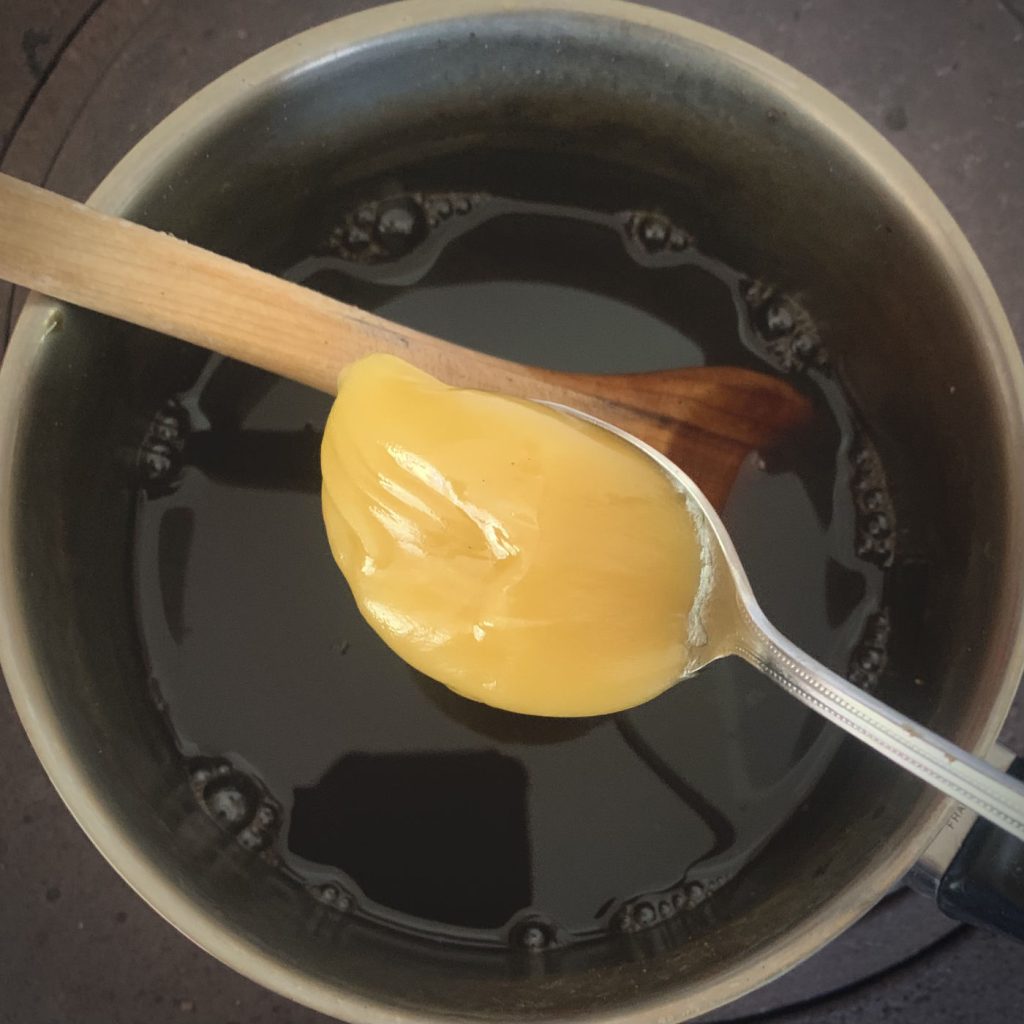
Good quality honey is used as a flavour enhancer to this otherwise bitter tonic and more importantly, as a preservative to help the tonic stay fresh for longer. Moreover, honey is extremely nourishing and can enhance the absorption of iron from food. Its gentle and nourishing properties make it an excellent complement to iron-rich plants, promoting better overall nutrient absorption and supporting the body.
Fresh vs. dried plant material
You might have just caught yourself some fresh roots, berries or leaves and wonder if they can be used fresh in this recipe. If so, the answer is yes! Fresh plants may be used just as well as dried, however, the ratio of the recipe will differ somewhat. The main difference between dried and fresh plants is their water content. The fresh plant will contain more water and also weigh more than the dried plant, though how much varies and it is therefore easier to get more accurate measurements with dried plant material. Should you want to use fresh plant material in this recipe, double the weight and perhaps use a little less water and you should get close to the same result.
Why this herbal iron tonic?
So why should you bother making this remedy when there are plenty of iron tablets and tonics available in stores? That’s entirely up to you to decide, of course. However, below I’m sharing my thoughts and reasons.
Having the knowledge and ability to naturally care for oneself, I believe, enriches us on a deeper energetic level and helps to realign us with nature. When you create your own iron tonic, you’re in full control of the ingredients, avoiding unnecessary additives or chemicals often found in store-bought options.
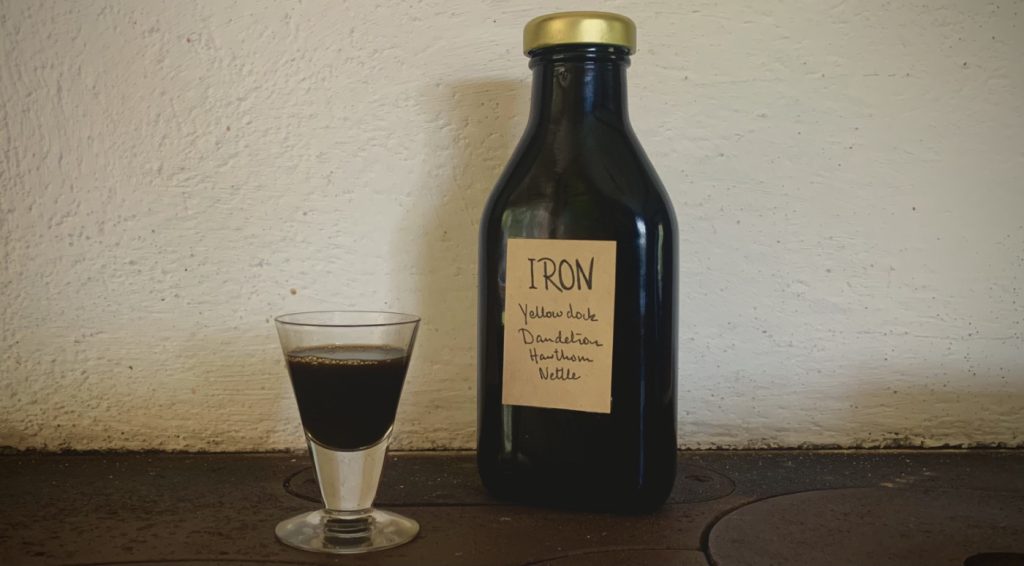
The plants used in this recipe are relatively easy to buy at reasonable prices, and even better, are easily accessed in nature where they grow in abundance. As well as being naturally rich in iron these plants also naturally contain digestive supporting properties enabling them to combat digestive problems which are often associated with store-bought iron tablets.
Lastly, the process of preparing your own remedy with the plants becomes a therapeutic and mindful experience, strengthening your connection to both yourself and the natural world.
Love, Sarah Águsta