


While there are many excellent ways of benefitting from our beloved plants, herbal teas remain a favourite for many. The, for most people, accessible and soothing act of preparing tea and drinking it is a nourishing process in itself, awakening a sense of healing within. You get to observe the herb’s colour infused into the water, smell, taste, and feel its medicine entering your being.
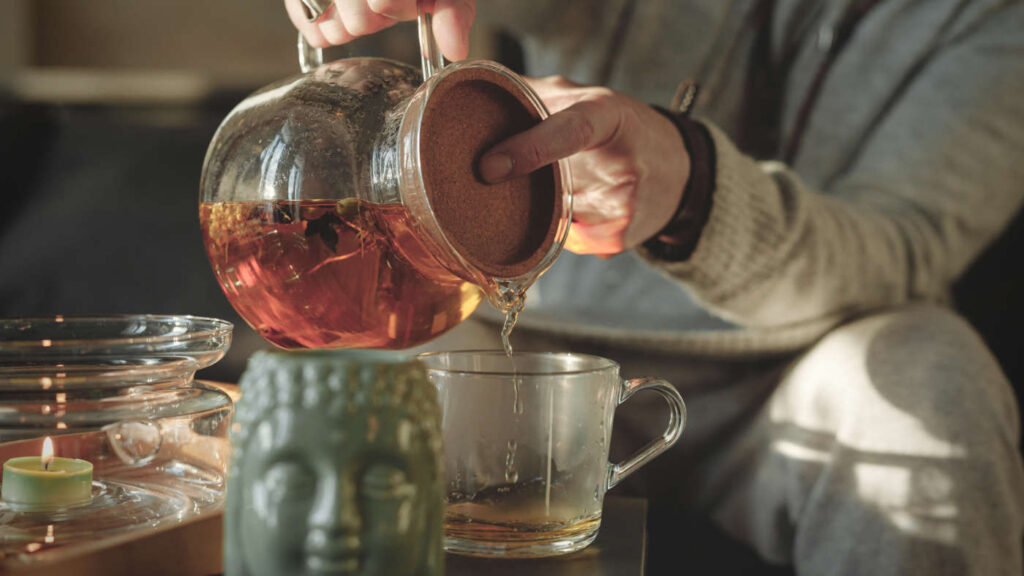
While it is true that herbal teas generally aren’t as potent or as active as tinctures and other highly concentrated herbal remedies, they are the most effective medicines for chronic, long-term imbalances and the perfect remedy, in my opinion, for supporting the whole being through all of life’s possible challenges. One might only need to explore a bit to find the perfect herbal tea suitable for their individual needs.
How to make a herbal tea medicinal
There are a few different ways to go about preparing herbal teas as medicine. A simple tea bag in a cup of hot water won’t extract enough of the plant’s medicinal value to provide healing, and all parts of a plant’s medicine don’t respond to a simple infusion. Below, I have described two basic ways in which different plant groups are best prepared for their medicinal values:
Delicate plant parts
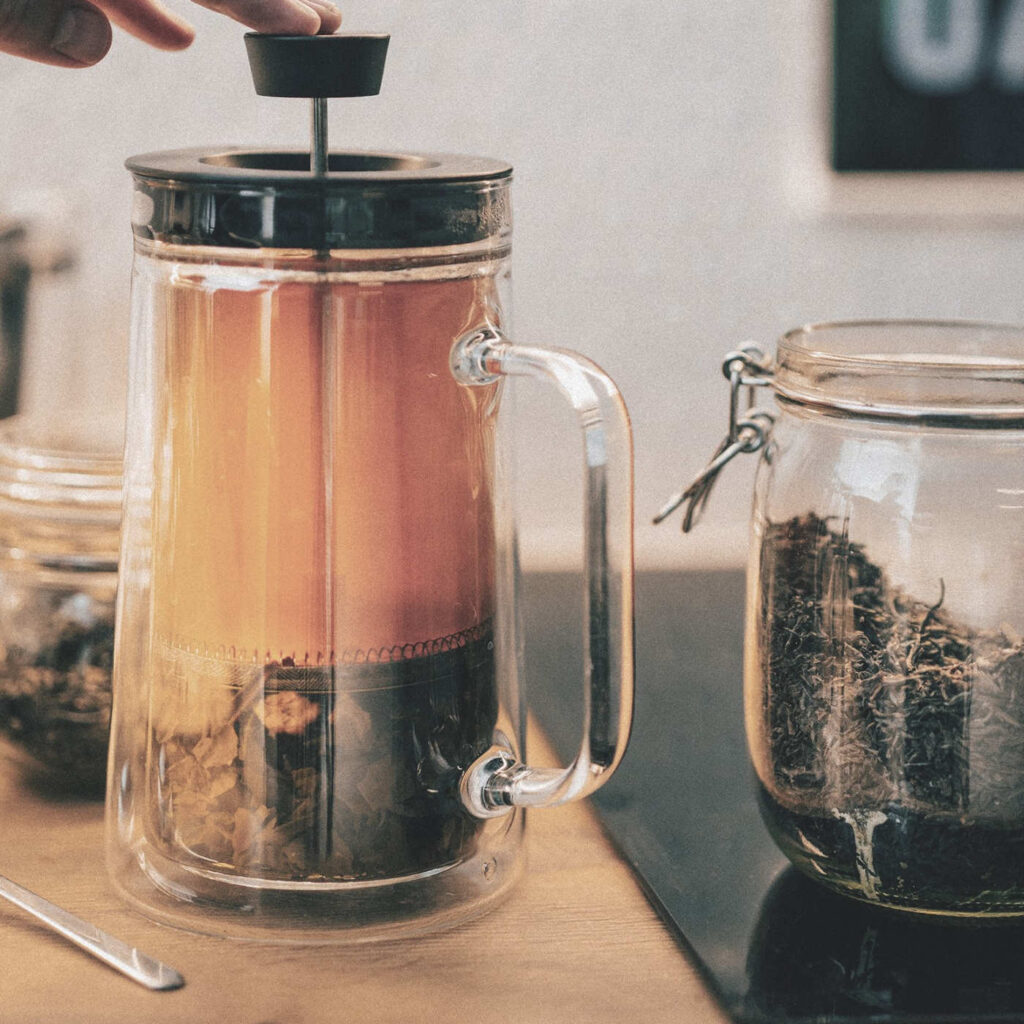
All aerial parts of a plant, such as leaves, flowers, and stems, are considered delicate in terms of how to prepare them as tea. To get the most medicinal properties of these herbs into your tea, you make an infusion with about one tablespoon of dried herb or two tablespoons of fresh herb to each cup of boiling water (approx. 250ml). Pour the boiling water over the herbs and cover so that any volatile oil doesn’t escape. This is particularly important with many aromatic herbs whose medicinal properties lie foremost in their volatile oils. Leave the tea to infuse for 30-45 minutes before you strain and drink it. A longer infusion time will make a stronger medicine.
Tough plant parts
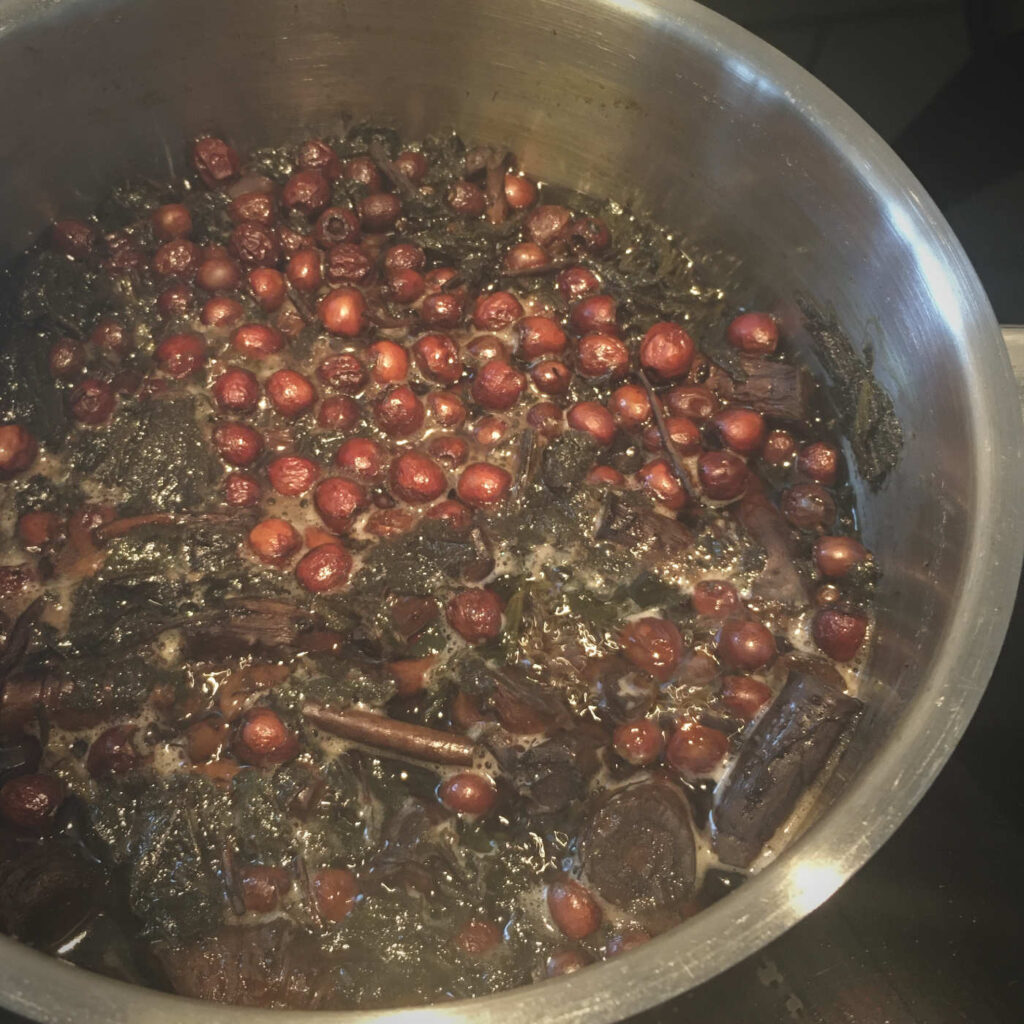
Tougher woody or leathery plant parts, including roots, rhizomes, hard seeds, berries and barks, require a stronger method of preparation to extract their medicinal properties – a so-called decoction. Here, we want to crush or bruise the plant parts a little bit, place them in a pan with water, heat slowly and leave to simmer with the lid on for 20 to 45 minutes. Again, the longer you simmer the herbs, the stronger the tea will be. Furthermore, the harder the herb material is, the longer the decoction will have to simmer. When the water has reduced to about half of what it was, the decoction is generally filled with medicinal properties and ready to be removed from the heat and strained. The straining is best done with a muslin cloth or the like so that you can squeeze out all the medicinal liquid. The water plant ratio should be the same as when making an infusion: one tablespoon of dried herb or two tablespoons of fresh herb to each cup (approx. 250ml)of water.
Cold infusions
Some herbs respond better to cold infusions where you leave the herbs in cold water and let infuse over night (approx. 12 hrs) at room temperature and strain in the morning. Personally, I only ever do this with plants high in mucilage, like marshmallow root. However, people also prefer this method for delicate fresh flowers and leaves such as chamomile flowers and peppermint leaves. Once infused and strained, the cold infusion can be heated to desired drinking temperature.
Use and Storage
Once infusions and decoctions are strained and ready, they should, unless they are to be consumed immediately, be refrigerated, where they remain fresh for up to 4 days. When left at room temperature for several hours, teas form tiny bubbles and begin to sour. Having said that, you may leave your hot tea to cool down somewhat before placing it in the fridge. No problem. Another option is to store your tea in a thermal flask and enjoy hot throughout the day.
Herbal teas can be drunk hot, at room temperature, iced, or made into ice cubes to later be enjoyed in water or juice. They can be sweetened with honey or maple syrup for improved flavour – some herbs are quite difficult to enjoy on their own. This tends to be the case for decoctions, especially. To benefit from the herbal teas medicinally, you should consider the directions and dosages given in the chart below:
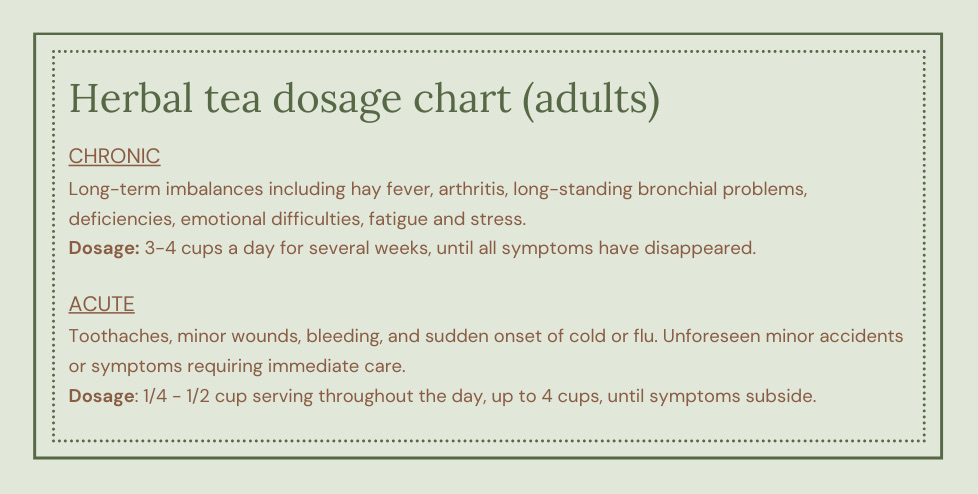
When using herbal teas medicinally in this way, it may quickly become impractical and time-consuming to prepare a tea by the cupful. Instead, prepare about a litre of tea each morning or whatever time suits you, keep it in the fridge and medicate on as suggested above. Big glass jars with tight-fitting lids are perfect for storing teas in.
Contraindications
When it comes to medicine, herbs are among the safest available on this earth, and the herbs you are likely to come across, the ones we use in modern-day herbalism, have been tested and used for centuries by people all around the world. You must, however, still, like with any other medical prescription, before beginning a potent herbal tea therapy, check your food and allergies, and look for any potential interference with other medication. If you are pregnant or wishing to conceive, be aware of potential herb-pregnancy contraindications. There are, in fact, quite a few herbs out there that are not considered appropriate to take medicinally during pregnancy.
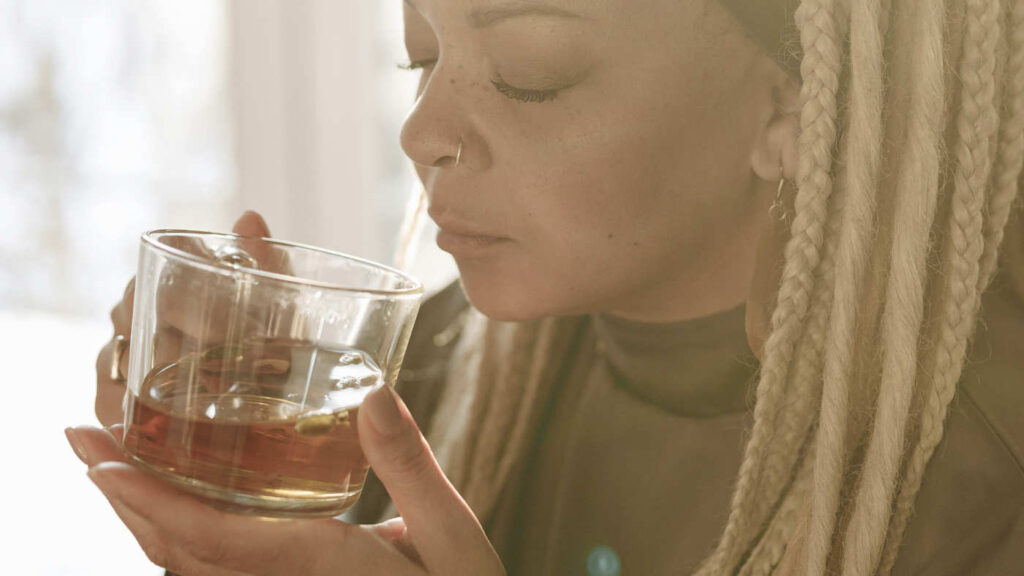
Plants are wonderful healers on so many levels – medicine, nourishment, and emotional care. Tea is a wonderful menstrum in understanding and benefitting from them.
Love, Sarah Águsta

